
How to get out of debt: snowball or avalanche
Compare the debt snowball and the debt avalanche method, learn how to build your payoff plan step by...
Read →A practical guide to collecting overdue invoices: payment terms that prevent delays, a reminder schedule, and what to do when the client goes silent.
For a freelancer or a small business, an overdue invoice isn't an accounting problem, it's a cash problem. The work is done, the costs are paid, and the money is sitting in someone else's account. The good news is that most delays are prevented or resolved by a process, not by a difficult conversation.
Before chasing payment, it helps to know what's holding it up. In practice, almost every delay falls into one of these buckets:
The first four are failures in your own process, which is good news: you can fix them without depending on anyone.
Getting paid on time starts before the invoice goes out:
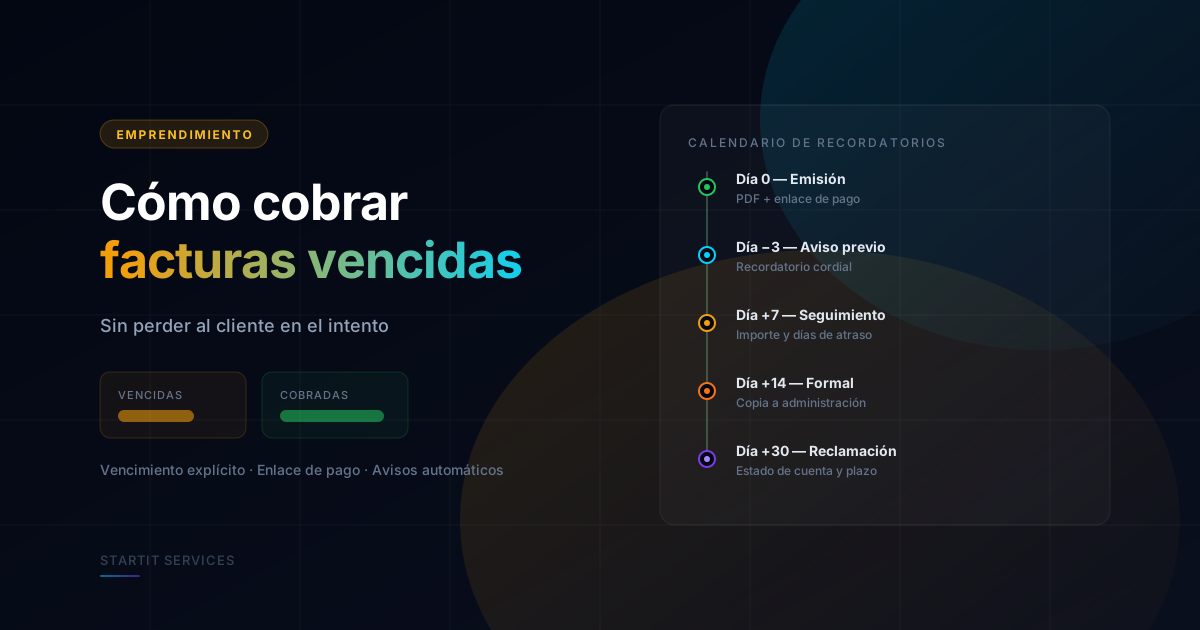
A client who hasn't paid is rarely avoiding you: your invoice simply isn't at the top of the pile. This sequence resolves most cases without any escalation:
Repeat the payment link and the exact amount in every message. Forcing the client to dig up the original email adds friction exactly where you don't want it.
If 30 days have passed with no response, change the channel before you change your tone. One call to accounts payable resolves more than five emails, especially when the blocker is a missing field nobody dared to ask you for.
If that still gets nothing, escalate in this order: a formal email with a statement of account and a deadline; a written pause on work in progress; a payment plan if the client acknowledges the debt but can't clear it at once; and only at the end, a formal claim. Keep the full paper trail throughout: signed contract or accepted proposal, deliverables, the invoice, and every follow-up message.
Manual follow-up fails for the obvious reason: it's uncomfortable, so it gets postponed. When the reminder goes out automatically from your invoicing system, it stops being a personal decision and becomes a procedure.
SIM, Startit's invoicing app, keeps the status of every invoice visible — issued, paid, overdue — and sends invoices with a payment link so that paying you takes the client one click. Knowing at any moment how much is outstanding and for how long is, in practice, half the collections work.
If you only do three things: put an explicit due date on every invoice, include a payment link, and schedule the reminder for three days before. Those are the three lowest-effort changes with the biggest effect on how fast you get paid.
Compare the debt snowball and the debt avalanche method, learn how to build your payoff plan step by...
Read →The Latino SMB market in the US is growing faster than ever. And digital presence remains their Achi...
Read →